


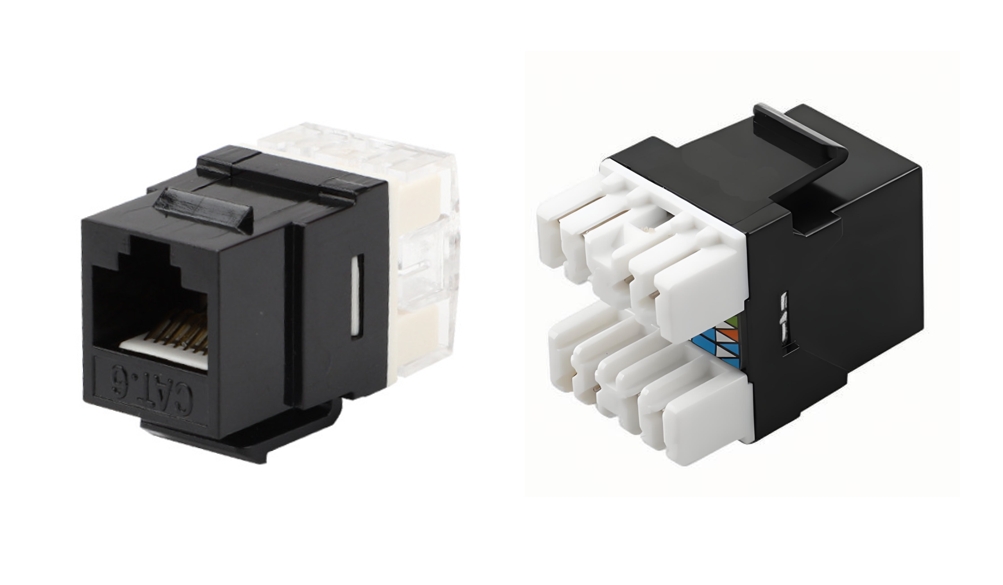
Why the Same RJ45 Connector Works in One Batch but Fails in Another?
For many network accessories importers and distributors, RJ45 connectors are often seen as simple, low-risk products. They are small, affordable, and widely used. Yet in practice, they are one of the most frequent sources of post-installation complaints.
When a network link drops or performance falls below expectations, the Ethernet cable is usually blamed first. However, industry experience and field reports suggest that a majority of post-installation RJ45 failures are caused by connector-related issues—including material quality, compatibility mismatches, and batch inconsistency—rather than the cable itself.
This article outlines 4 common reasons RJ45 connectors fail after installation, with practical takeaways for importers and distributors looking to reduce returns, complaints, and long-term reputational risk.
1. Contact Pin Material and Plating Quality: A Hidden Risk
One of the most overlooked causes of RJ45 connector failure lies in the contact pins. Although small, these components play a critical role in signal transmission and long-term connection stability.
Common issues found in lower-grade RJ45 connectors include:
•Thin or low-grade copper alloy pins instead of phosphor bronze, which offers superior elasticity and conductivity
•Inconsistent gold plating thickness, often below commonly accepted industry ranges
•Weak spring tension design, leading to reduced contact pressure over time
These issues may not appear during basic continuity testing. However, after installation, they often result in:
•Increased contact resistance
•Degraded signal integrity
•Intermittent connection drops, especially under sustained network load
What Importers Should Pay Attention To:
When sourcing RJ45 connectors, request material specifications for contact pins and clarification on plating thickness consistency. For environments with frequent reconnections or higher usage intensity, thicker and more stable plating significantly improves long-term reliability.
2. Connector Design Mismatch With Cable Type
A common assumption among importers is that “universal” RJ45 connectors work equally well with all Ethernet cables. In reality, connector design must align closely with cable construction.
Typical mismatch scenarios include:
•RJ45 connectors designed for stranded conductors being used with solid conductor cables
•Improper pin penetration due to conductor diameter differences
•Connections passing basic tests but failing under real-world traffic conditions
This issue becomes more pronounced with Cat6 and Cat6A cables because they typically use thicker conductors (commonly 23AWG) and have tighter tolerance requirements.
Even small mismatches in pin penetration depth or alignment can lead to insufficient conductor contact, which may not be obvious during initial testing but can cause instability under higher frequencies or sustained data loads.
What Often Gets Missed:
Before sourcing, confirm whether a connector is designed for solid or stranded conductors and verify compatibility with your cable’s AWG range. Clear alignment between connector design and cable structure is essential for stable performance.
3. Manufacturing Tolerances & Batch Consistency
For importers, this issue is relatively rare, but when they do occur, they often surface after project installations, leading to significant rework and customer complaints.
The challenge lies in the fact that individual samples usually perform well, and appearance or model numbers do not reveal any obvious differences—issues only emerge during real-world use or batch comparisons.
A common scenario:
One batch of RJ45 connectors performs reliably during installation and testing, while the following batch—identical in appearance and model—experiences contact failures, speed negotiation errors, or intermittent link drops.
Potential underlying causes include:
•Worn molds that haven’t been recalibrated, causing subtle deviations in contact position or crimp depth
•Changes in contact material or supplier, affecting elasticity and conductivity
•Variations in plating process control, leading to differences in gold thickness or uniformity between batches
These variations rarely appear in standard factory test reports and do not necessarily indicate non-compliance with basic specifications. However, under long-term use or high-load conditions, they can significantly increase the risk of failure.
Of course, risks can often be identified before large-scale deployment by:
•Comparing samples from different batches
•Including a small number of same-day production samples with actual orders
•Performing simple crimping and delayed-use tests
These approaches do not require complex equipment, yet they effectively reveal potential issues caused by mold wear, tolerance drift, or process variations.
4. Installation Tools & Environmental Factors: System-Level Risks
RJ45 connectors do not function in isolation—they are part of a system that includes cables, crimping tools, and the operating environment. Failures often arise not from a single cause, but from the interaction between connector design, tooling, and post-installation conditions.
Common causes of failure:
•Tool incompatibility: Connector design may not match widely used crimping tools, e.g., pass-through connectors needing specific tools. Misalignment can deform pins or housings, leading to intermittent failures weeks later.
•Environmental stress: Poor plastic resin quality or weak structural design makes connectors vulnerable to temperature fluctuations, vibration, and repeated plug/unplug cycles.
•Long-term degradation: Even properly installed connectors can lose pin contact pressure or deform housing under sustained use or harsh conditions.
For importers, they can pre-test the compatibility of RJ45 connectors with mainstream crimping tools in the target market, consider environmental adaptability, and make preparations in advance.
Final Thoughts
RJ45 connectors are not "simple accessories"; their reliability depends on materials, structural compatibility, manufacturing consistency, tool adaptability, and operating environment.
For importers, the real way to reduce risks is not simply to lower prices, but to understand these details and conduct basic verification to reduce hidden after-sales costs.
When post-installation issues arise, the cable is often the "scapegoat", but the real cause is usually laid at the RJ45 connector stage.